Refinish or Replace? Painting Cabinets and Built-Ins
A fresh finish can transform outdated cabinetry without tearing out anything that's still structurally sound.
September 23, 2026 · 4 min read
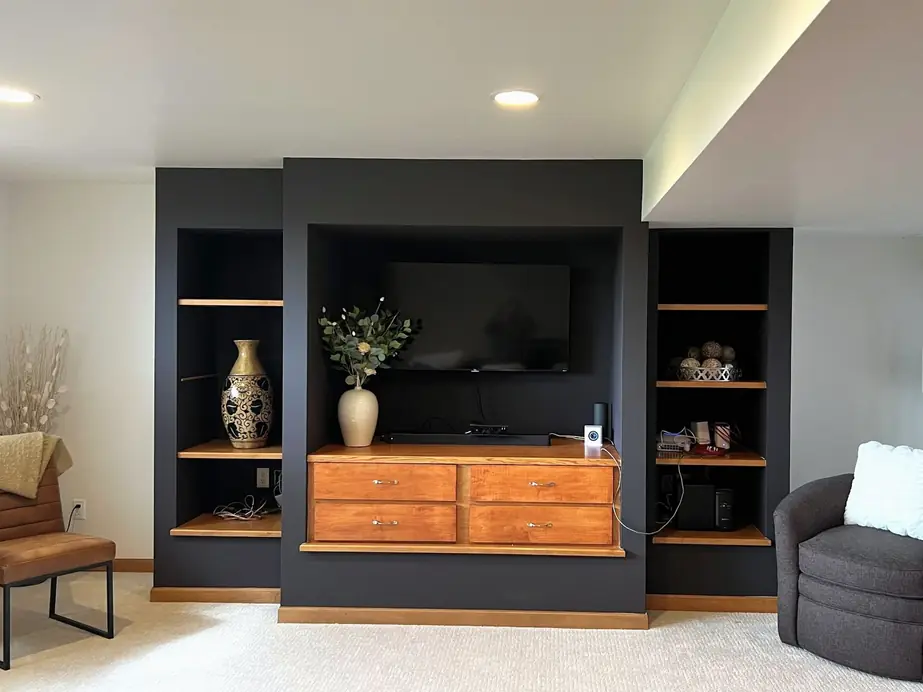
Kitchens and built-ins tend to age faster than the rest of the house. Cabinet doors get scuffed, finishes yellow, and styles that felt current a decade ago start to feel dated even when the boxes underneath are perfectly solid. When homeowners start looking into updating their cabinetry, the question that comes up almost immediately is whether to replace everything or refinish what's already there. It's worth understanding what each path actually involves before deciding, since they solve different problems.
What refinishing actually changes
Refinishing means giving your existing cabinets or built-ins a new painted finish rather than tearing out the boxes and installing new ones. The structure, the doors, the drawer boxes, and the hardware locations generally all stay the same. What changes is the surface: old, worn, or outdated finishes get replaced with a clean, modern coat in a color you choose. This is a completely different scope of work from replacement, since it doesn't involve demolition, new carpentry, or reconfiguring your kitchen layout. For a piece of built-in cabinetry that's structurally sound but visually tired, that's often exactly the update it needs.
Why preparation matters more here than almost anywhere else
Cabinet refinishing lives or dies on preparation. Cabinet surfaces get touched constantly, opened and closed hundreds of times a week, wiped down, and exposed to grease and moisture in a way that a living room wall never is. A finish that isn't properly prepped will show wear at the hinges and handles within months. That's why our cabinet refinishing work focuses heavily on precise preparation before any color goes on, so the final finish is durable enough to hold up to daily kitchen or bathroom use rather than just looking good on installation day.
- Refinishing keeps the existing cabinet boxes, doors, and layout in place
- Only the surface finish changes, which is a smaller project than full replacement
- Preparation is the step that determines how well the new finish holds up
- A range of styles and colors are available to match your vision for the space
- Refinishing is generally a faster path to a fresh look than a full teardown and rebuild
When replacement makes more sense
Refinishing isn't the right call for every situation. If cabinet boxes are water damaged, structurally compromised, or you're planning to change the kitchen's layout entirely, a fresh coat of paint won't solve those underlying problems. Refinishing is a cosmetic and protective update, not a structural repair. If your cabinets are sound but just look outdated, or you're happy with the current layout and simply want a different color or a cleaner, more modern finish, that's the situation where refinishing tends to make the most sense.
What the finished result looks like
A well-executed cabinet refinishing job should look intentional, not like a quick coat slapped over old wood. That means clean, sharp lines around panel edges and a smooth, even finish. Built-ins in particular, like the black-painted piece with wood drawer fronts shown above, can go from feeling like a leftover from a previous decade to a real design feature in the room, all without the cost or disruption of tearing anything out.
Thinking through color before committing
Because we supply all Sherwin-Williams paints for the job, cabinet color isn't limited to whatever a big box store happens to have in stock that week. That's a real advantage on a project like this, since cabinet color has a much bigger visual impact than a single wall does. A kitchen's cabinets are usually the largest continuous painted surface in the room, so it's worth spending a little extra time deciding between a crisp white, a deep navy or green, or a warm neutral before committing. If you're also repainting the walls or trim in the same space, it helps to think about cabinet color and wall color together rather than choosing one and then trying to match the other around it afterward.
Whatever direction you land on, and whichever surfaces in your home need it, all the small items removed from countertops and nearby surfaces will need to be cleared before work begins in the same way as any interior project, and any furniture nearby gets the same floor and surface protection as the rest of the job. It's a smaller-scale version of the same careful process used on a full room repaint, just concentrated on one set of cabinetry instead of four walls.
If you're weighing your options for a kitchen, bathroom, or built-in refresh, visit our Cabinet Refinishing page for more detail, or call us at (920) 203-8641 for a free quote on your specific project. Veteran, active-military, and senior discounts are available on this work as well.
Kenowski Painting Services LLC, (920) 203-8641
Call (920) 203-8641More articles
Getting Your Rooms Ready for an Interior Painting Crew
A little bit of prep on your end makes the whole project go faster, and most of the heavy lifting is on us anyway.
Choosing Interior Colors From the Sherwin-Williams Palette Without Regretting It
Color looks different in every house. Here's how to narrow down a palette you'll actually be happy with long after the crew has left.